
Mizzou Neuroscience
Shaping the Future of Neuroscience Research
Join an active community of faculty and graduate students from a wide range of disciplines, all engaged in pioneering basic and clinical research on the molecular and cellular organization of the nervous system, the function of crucial neural system, complex brain-generated behaviors, and the challenges of neurological diseases and disorders.
Degrees Offered
We are committed to providing a broad yet individualized training experience to prepare our graduates to succeed in future careers in academic research and teaching institutions, industry, and scientific publication.
Graduate Certificate
We provide a Graduate Certificate in Neuroscience to current MU post-baccalaureate and non-INP graduate students enrolled in neuroscience courses and research labs. This stand-alone certificate is aimed at students interested in applying to graduate or professional school or a career in industry.
Graduate Degrees
We offer graduate work leading to the degrees of Master of Science (MS) and Doctor of Philosophy (PhD) with a current enrollment of about 30 graduate students. The graduate studies program is interdisciplinary and highly individualized.
Research Highlights
Mizzou’s large and multidisciplinary neuroscience community is dedicated to pushing the frontiers of research. These efforts accelerate vital breakthroughs and inspire innovative, collaborative approaches to both teaching and discovery.
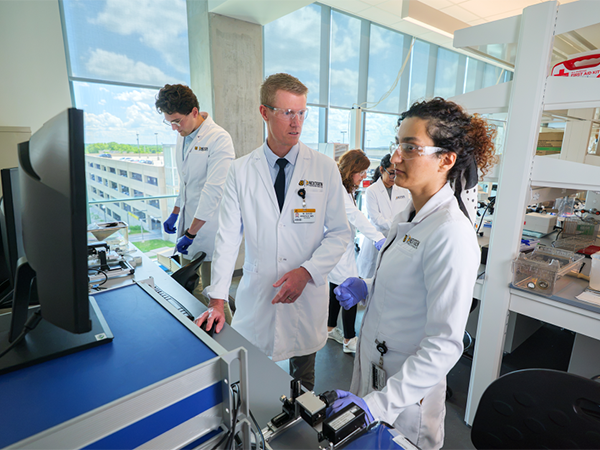
Changing the way we age: Mizzou discovery could help preserve muscle strength
W. David Arnold identified a breakdown in communication between nerves and muscles that could lead to new treatments for age-related weakness.

Mizzou researchers discover bullfrog brains can make their own backup fuel
The findings could shed light on what happens when human brains don’t get enough energy.

Mizzou research offers new hope for those at higher risk of Alzheimer’s disease
A NextGen Precision Health researcher found that an anti-aging drug improved brain blood flow for those at greater risk of the disease.