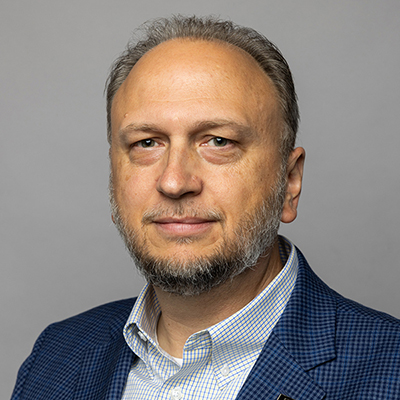
David Schulz , PhD
- Professor and Director Division of Biological Sciences
- Director Interdisciplinary Neuroscience Program
Research
- Accepting new advisees Is accepting new doctoral advisees
Areas of expertise
- Cellular and Molecular Neuroscience
- Developmental Neuroscience
Research Summary
The nervous system is an interconnected system of neural networks that controls everything from the most critical basic functions (e.g. breathing, walking) to highly complex behaviors. Because of this interconnected nature of the nervous system, injury and disease in one part of the brain can have downstream effects on other networks even though those networks themselves are not injured. The lab of Dr. David Schulz studies how loss of function in one “upstream” aspect of a neural network can have profound impacts on the uninjured “downstream” aspects of these systems.
The two major questions of the Schulz lab are how loss of input to neural networks changes the properties of the neurons of these networks, and what the impacts of those changes are for prospective recovery from injury. In particular, they are interested in how spinal cord injury changes the neural networks below the injury that are responsible for not only locomotion, but also the networks controlling fundamental and critical functions like bladder and bowel output. They combine molecular expression profiling with electrophysiology to understand how neuron and network physiology change, as well as the cellular basis for those changes. They use mouse models of spinal cord injury and neurological disease to conduct these studies. However, the mammalian nervous system presents many difficulties for detailed mechanistic investigation. Therefore, in addition, they use crustacean models (crabs and lobsters) to understand basic principles of neural network function and dysfunction following injury and perturbation.